Copyright XDA Developers
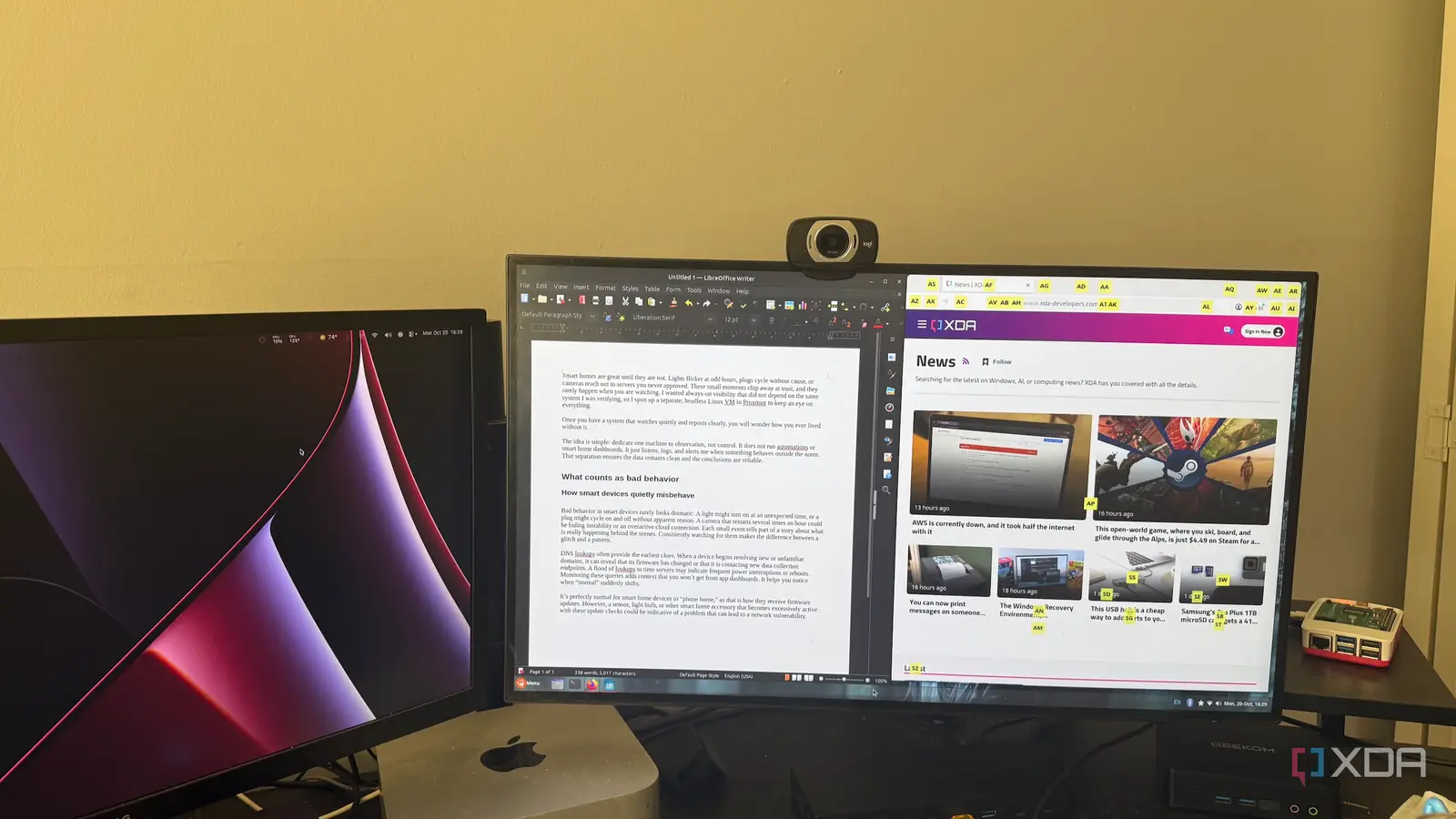
For many Linux users, the mouse has always been a secondary tool. Between terminals, shortcuts, and window managers, it’s possible to control nearly every aspect of the desktop without ever touching it. That efficiency mindset has led to a new generation of keyboard-driven workflows that emphasize speed, precision, and flow. Hints fits perfectly into that philosophy, giving users complete desktop control through an open-source interface that responds instantly to their typing. By focusing on the keyboard as the primary tool, Hints delivers a more deliberate, fluid, and efficient computing experience. What makes Hints stand out isn’t just what it does, but how naturally it becomes part of your rhythm. It overlays subtle labels on interactive elements, letting you type instead of clicking. You can open apps, switch windows, or even press GUI buttons with a single keystroke. Once you adapt, the traditional point-and-click workflow feels sluggish by comparison. The rise of keyboard-first computing Hints doesn’t just fill a niche, it expands what’s possible for Linux users who value control. The application acts as a visual layer that recognizes clickable elements across your desktop and assigns them quick, intuitive hints. By typing those hints, you can activate buttons, links, or fields without ever moving your cursor. It’s a fast, focused way to interact with the desktop that keeps your hands right where they belong: on the keyboard. That kind of design aligns perfectly with Linux culture. From Vim to tiling window managers, efficiency has always been at the heart of the platform. Hints takes that legacy and brings it to the broader desktop environment, eliminating the need for fragmented extensions or third-party accessibility hacks. It bridges the gap between the command line and graphical interface, combining the strengths of both. For those who spend hours every day switching between terminals, browsers, and editors, the result is transformative. You can flow from task to task without breaking concentration. The time you’d spend finding your cursor or clicking through menus is reclaimed, second by second. That rhythm is what keeps Linux enthusiasts hooked. How Hints changes your workflow A command palette for the entire desktop With a single shortcut, Hints reveals an overlay of small letter combinations across the screen. Each one corresponds to something clickable: a button, link, or input field. You type the combination, and Hints activates that element instantly. It’s similar to how text editors like Vim handle navigation, but applied to your entire operating system. Once you get used to it, it feels like second nature. What makes this approach so powerful is its universality. It works the same way whether you’re on GNOME, KDE Plasma, or something more minimal like i3. You don’t have to relearn your workflow every time you switch distributions or environments. That consistency creates a sense of permanence—a single language of control across Linux desktops. It’s also surprisingly accessible. Many users who find mouse use uncomfortable discover that Hints reduces strain and improves ergonomics. At the same time, it rewards power users who crave speed and customization. The balance between inclusivity and performance is rare, and Hints nails it. More than another app launcher Hints will inevitably draw comparisons to tools like Rofi, KRunner, or Ulauncher. Those tools are powerful in their own right, but they focus on launching applications or running commands. Hints takes the concept further, turning your desktop into an interactive map that can be navigated purely through typing. It’s the difference between opening an app and controlling everything inside it. That’s possible because of how deeply Hints interacts with the desktop. It interprets window hierarchies and interface data, identifying which elements can respond to user actions. As a result, it works even with GUI programs that were never designed for complete keyboard control. It’s both a productivity enhancer and an accessibility layer, wrapped in an elegant package. It also feels remarkably polished. There’s no sluggishness, no bloated interface—just an immediate response that feels natural. It’s lightweight enough to run unnoticed until you need it and disappears just as quickly once you’re done. It’s proof that open-source software can be refined, minimalist, and genuinely enjoyable to use. Where Hints still has room to grow Small frustrations and practical limitations For all its polish, Hints isn’t without quirks. Because it relies on reading graphical interface data, its accuracy can vary between desktop environments or applications. Certain GTK or Electron-based apps don’t always expose every clickable element, leading to moments when hints appear incomplete or out of alignment. These issues aren’t constant, but they’re noticeable enough to occasionally interrupt an otherwise smooth experience. Hints does depend on a compositor, but most Linux window managers or desktop environments have that already baked in. If you launch Hints and the overlay covers your entire screen, you don’t have a compositor installed, the easiest way to resolve this would be to install a full version of Gnome or KDE Plasma using your distribution’s package manager. There’s also a learning curve, even for seasoned Linux users. Remembering key sequences or interpreting overlays takes time to master. Some users may find the visual clutter distracting at first, especially on busy desktops or multi-monitor setups. Once you get comfortable, those concerns fade, but the adjustment period can feel longer than expected. Finally, Hints is still an evolving project. It lacks the massive plugin ecosystem or graphical polish of commercial tools like Raycast or Alfred, though that’s more a matter of scale than design. The core features work beautifully, and the open-source community behind it is quick to patch and improve. For users willing to accept a few rough edges, Hints more than earns its place in the Linux toolkit. That’s also where its open-source nature becomes a strength. Unlike proprietary utilities that stagnate behind paywalls, Hints grows through collaboration. Its contributors test across countless hardware setups, share improvements, and fix bugs faster than most closed teams could manage. That cycle of community-driven iteration ensures that today’s rough edges are tomorrow’s refinements, keeping Hints firmly on the path toward being an indispensable Linux staple. A more intentional way to use Linux Hints bridges the gap between the command line and graphical interface, combining the strengths of both. Hints represents a shift in how Linux users interact with their systems. It doesn’t demand you give up the mouse entirely, but it makes you want to. By focusing on the keyboard as the primary tool, Hints delivers a more deliberate, fluid, and efficient computing experience. It’s the kind of project that quietly changes your habits. Once you adapt (and configure Hints for apps that don't necessarily play nicely with the tool), you won’t want to go back.