Copyright Inc. Magazine
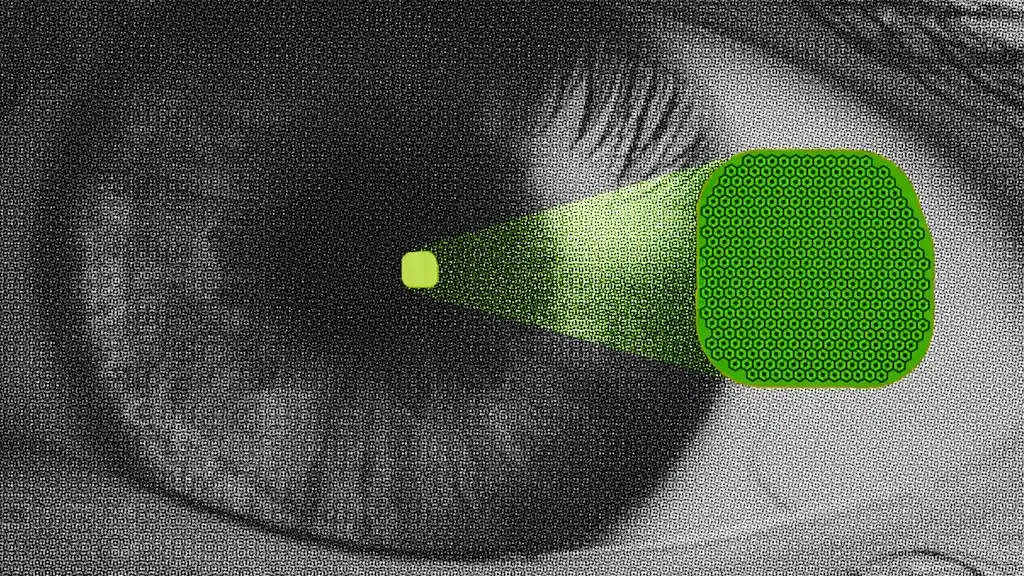
Science Corp. is on a mission to cure blindness using brain-computer interfaces, and on Monday it took one step closer to achieving that goal. Headquartered in Alameda, California, the biotech company released data from the latest clinical trial of its PRIMA device, an implant designed to restore central vision in people with age-related macular degeneration—one of the leading causes of blindness worldwide. The disease has no cure, with previous therapies only ever managing to slow its progression. Macular degeneration is when the cells inside a person’s retina begin to degrade and die, leaving that person with a growing black hole in their field of vision that eventually destroys their ability to see anything. The company’s PRIMA device, which is a retinal implant plus glasses, restores a person’s ability to see by essentially refilling the black hole with the lost visual information. “Visual prostheses to restore vision to the blind have been a big prize for many decades,” Max Hodak, the CEO of Science, said in a video accompanying the new data. The trial assessed 32 people over the age of 60 who had had the PRIMA implant for at least a year. They found that after 12 months with the implant, PRIMA had meaningfully restored vision in 26 participants, giving them back the ability to read words, numbers, and letters. In some, the effects were so profound as to enable them to read entire books, according to Science. The results were published in The New England Journal of Medicine. Featured Video An Inc.com Featured Presentation Their results represent “the best visual acuity that’s been achieved so far with retinal prostheses,” says James Weiland, a professor of biomedical engineering at the University of Michigan who is developing a similar retinal implant and was not involved in the new study. How PRIMA works PRIMA is the brainchild of Daniel Palanker, a professor of ophthalmology at Stanford University, who started working on the system in 2004. The implant is based on an array of photovoltaic cells—essentially tiny solar panels—and is about the same size as a pinhead. That’s small enough to be placed under the retina, which is a crucial location, Frank Brodie, Science’s medical director for blindness, says. “You’re still harnessing all the processing power of the retina,” he explains. Using the retina is much more intuitive for the brain, as it essentially replicates what the eye was already used to doing. And it’s far less invasive than other brain-computer interfaces that require brain surgery, because the optical nerve, while part of the brain, is accessible through the eye itself. To use PRIMA, a person needs to have the implant placed in their retina and also wear a special pair of glasses that, alongside a camera that sits on the glasses, beams infrared video images at the implant. It sends them on to another device that the user can hold in their hand, like a remote control, that essentially acts as a magnifying glass. Then the images are sent back to the implant again. With some practice, the entire system effectively restores some of the flow of visual information from the eye to the brain, reversing the effects of age-related macular degeneration. “With this generation of chip, this is doubling their vision,” Brodie says. PRIMA is totally wireless. The implant is essentially a bundle of tiny solar panels, so all it needs to work is light—that offers users far more flexibility than past implants for blindness, which all had cables. In the future, Science plans to streamline the glasses, too, so that patients have no need for the hand-held external processor, Brodie says. He envisions them looking somewhat like Meta’s Ray-Bans. The results are impressive, says Matthew Petoe, an associate professor at the University of Melbourne whose work focuses on visual prostheses; he wasn’t involved in the new study. Still, he cautions that it is important to remember that implants like PRIMA, while a leap forward, are not able to restore what we might think of as “natural” vision. “State-of-the-art visual prostheses can enable recipients to recognize high-contrast shapes, text, and avoid obstacles, but no device to-date has accurately recreated natural vision,” he says. What’s next for Science Science’s mission was inspired in part by its CEO, Hodak, who was previously the president and co-founder of Elon Musk’s brain-computer interface company, Neuralink. Hodak started Science in 2021 after leaving Neuralink; Science acquired Pixium, a French company that was developing Palanker’s implant, in 2024. Today, Science has a staff of 175 and has raised approximately $250 million. Hodak’s grandfather, an amateur photographer, suffered from age-related macular degeneration, destroying his ability to do the things he loved. In Science’s latest clinical trial, all the participants were far beyond the point of being legally blind. “This is really a population that needs help,” Weiland, the University of Michigan expert, says. Science has applied for regulatory approval for the PRIMA device in Europe; they are also going through the U.S. Food and Drug Administration approval process and are building a patient registry for people who are interested in getting the implant in the future. In the meantime, Science isn’t resting on its laurels, Brodie says. The company is working on a next-generation version of its glasses, and on getting their implant’s 378 electrodes to be even smaller than they already are now (about the width of a human hair) so that they can increase that number without making the implant itself any bigger. They are also working on making the PRIMA system easier to use. A major hurdle for some patients in the clinical trial was that PRIMA takes practice—and not everyone stuck to the regime, Brodie, Science’s medical director for blindness, says. “Some of it is just mechanically learning how to use the device and the chip,” he says. “Some of it is actually just kind of teaching your brain to respond to those signals. It’s an area of the retina that hasn’t seen anything for years. So the brain is not used to interpreting visual information from there. So it’s not like flipping on a switch or riding a bike. You actually have to teach your brain to see in that area again.” Could future implants cure blindness? All of this work is inching toward the Holy Grail of this field: An implant that works so well as to restore at least some sight immediately. “It needs to be intuitive. It needs to be like cataracts, where you take the crystalline lens out, you put an artificial lens in, and all of a sudden, it’s like ‘oh, wow. That’s clear now, I can see again.’ And we’re probably never going to be that, but we need to be better than we are now,” Weiland says. He predicts the field has another 20 years until it reaches that milestone. Brodie is more optimistic: He says future generations of the PRIMA chip could feasibly achieve 20-20 vision in some patients. Science is also developing engineered proteins called opsins, which in the future might be used in complement with the PRIMA implant, Brodie says, because this approach would also help improve a patient’s peripheral vision, as well as their central vision. “I think they’re really complementary, synergistic technologies that could in a very real way take care of blindness. You have a patient that can now see peripherally and centrally. We now have two different approaches that can work together to restore sight,” he explains.